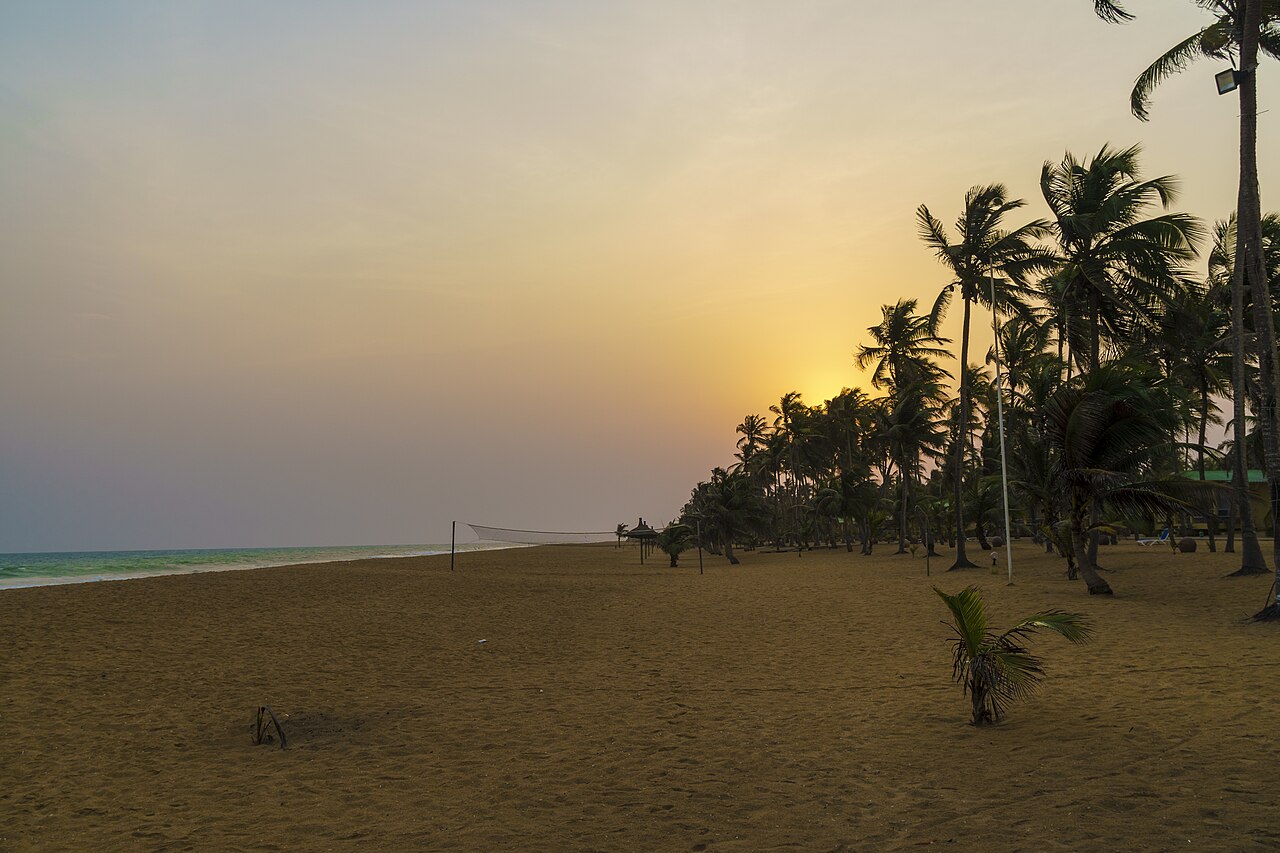
The Freetown Peninsula coast is best experienced through a paced coastal outing rather than a rushed beach stop. The Sierra Leone National Tourist Board lists peninsula beach activities as part of its destination offering, and the live Trek Africa Guide attraction guide advises: choose a main base, then arrange any outing to the neighbouring area with local advice, agreeing price, equipment and return time in advance. Do not assume a beach-to-beach walk or crossing is appropriate under every tide or weather condition; ask about the day's conditions and use transport when that is the sensible option.
What the coastal excursion covers
A typical peninsula outing combines the River Number Two estuary (15 km from Freetown, described by the Ministry of Tourism as a white powdery beach fringed by palm trees where emerald river waters meet the turquoise Atlantic) with Tokeh Beach (~20 miles from Freetown near York, fishing and tourism economy, home to The Place Resort). The attraction guide frames these as neighbouring but distinct settings: River Number Two for its river-meets-ocean estuary and community association; Tokeh for its beach crescent and resort base. A community-hosted boat trip or pirogue ride on the coastal waters, a guided beach walk at low tide, and time with the local community association are the core experiences. The NTB's seasonal guidance (dry November–April, wet May–October, harmattan December–February) and the attraction's tide-awareness caution mean the exact shape of the day depends on conditions.
Community visits and local guidance
The Ministry of Tourism notes River Number Two's community association and Tokeh's fishing economy. The attraction guide advises: "For a community visit or boat outing, agree the price, equipment and return time in advance." This is not a commercial tour product with a fixed itinerary; it is a locally hosted experience. Ask your host or accommodation to arrange a community guide who can explain the setting, introduce the association, and manage tide and swimming safety. Respect photography expectations and community rules. The NTB's hire-driver and night-travel advice applies to the peninsula road approach as well.
Tide, weather and swimming caution
The attraction guide explicitly warns: "A clear day does not establish that every stretch is safe for swimming" and "avoid entering river mouths or unfamiliar water on appearance alone." Tidal conditions at the estuary and beach change through the day; a low-tide beach walk between Tokeh and River Number Two may be possible at certain windows but not others. Confirm the day's tide table and local swimming advice with your guide before entering the water. The NTB notes coastal temperatures of 23–30°C year-round, with wet-season torrential downpours (May–October) affecting movement and dry-season harmattan dust (December–February) reducing visibility.
Transport and base logistics
Arrange a road transfer from Freetown (or Lungi International Airport via the 30–40 minute ferry or 10-minute helicopter crossing) to your exact property or beach entrance. The attraction guide advises: "Ask for current road conditions and the best route rather than relying on an older travel account." The Place Resort (Tokeh) and Hotel Barmoi (Aberdeen, Freetown) are the two published stay guides on the peninsula; both can assist with arranging local outings. If based in Freetown city, the peninsula drive is approximately 15–30 km depending on the beach; allow time for the return journey and do not tie the outing to a tight airport connection.
Extended peninsula options
The NTB's broader peninsula activities list includes Tacugama Chimpanzee Sanctuary (40 minutes from Freetown in the Western Area Forest Reserve), Bunce Island (slavery history ruins), Bureh Beach (surfers' favourite, 4 km crescent), and York Beach (culture, history, wildlife). These are separate outings from the core River Number Two–Tokeh coastal excursion; discuss combinations with your host if you have multiple days.
What to pack
- Sun hat, high-SPF sunscreen, light long sleeves for sun and insect protection
- Quick-dry shorts or swimwear with a cover-up; water shoes or secure sandals for estuary/boat boarding
- Light rain layer for wet season (May–October) or harmattan dust protection (December–February)
- Water in a small bag, personal medication, cash (Leone/USD) for community fees and incidentals
- Camera/phone in a dry pouch; ask permission before photographing people
For the wider country context, read the Sierra Leone country guide, the first-visit insight, and the Tokeh and River Number Two attraction guide.