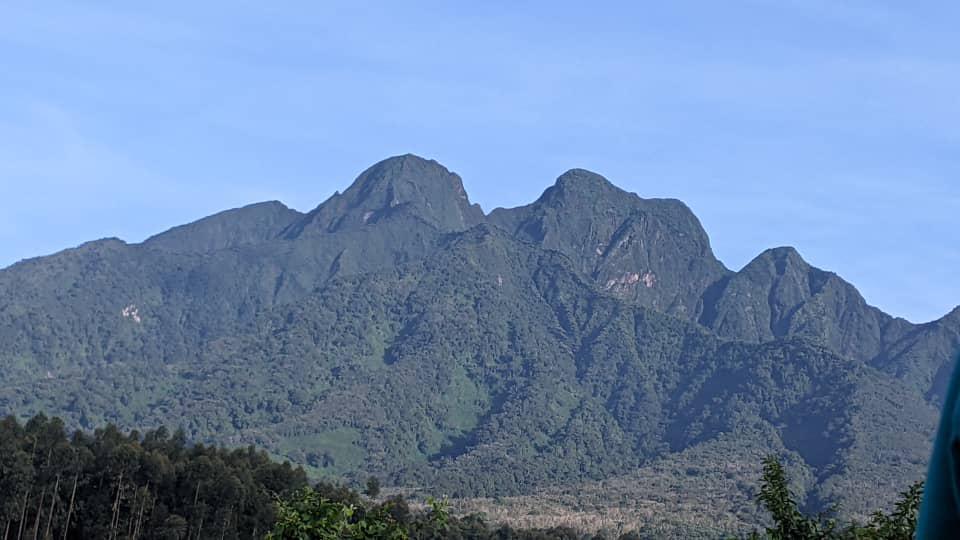
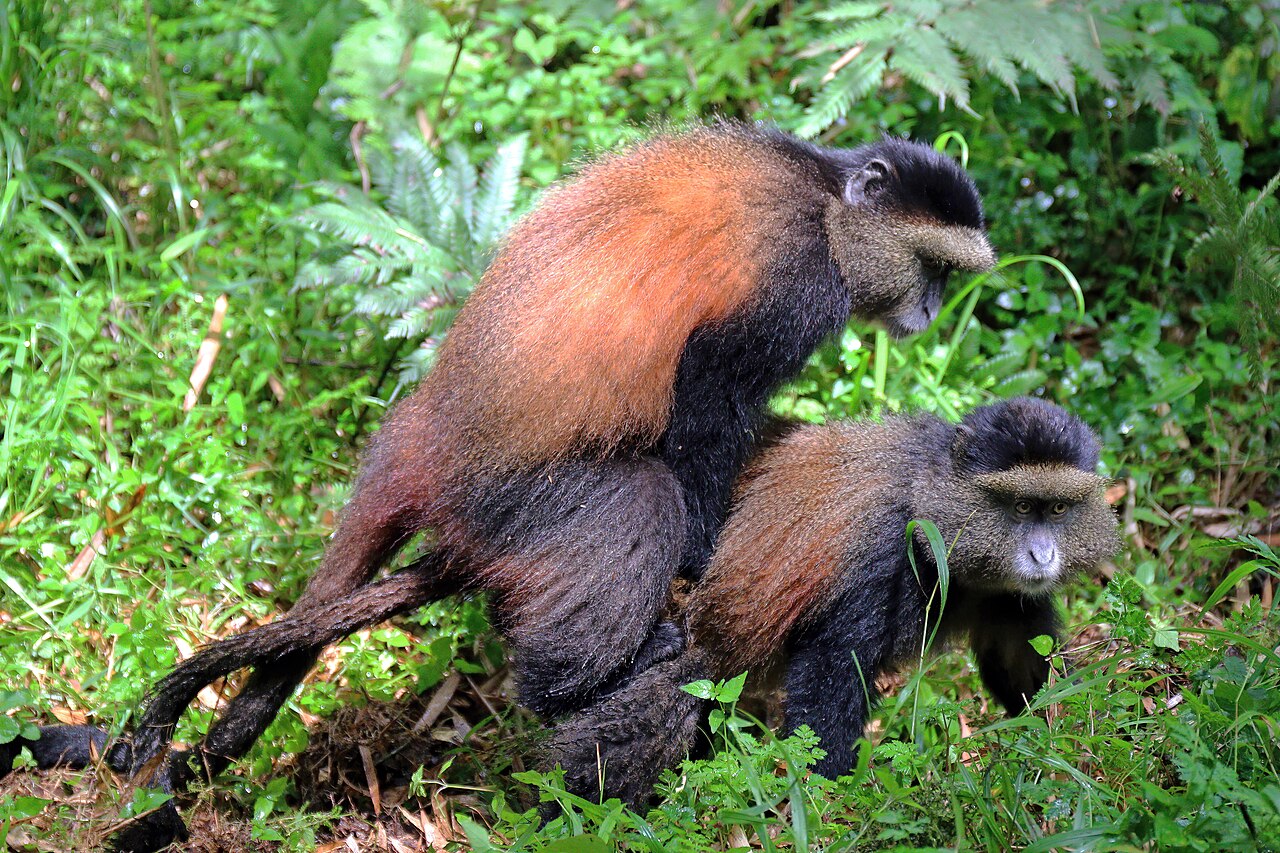
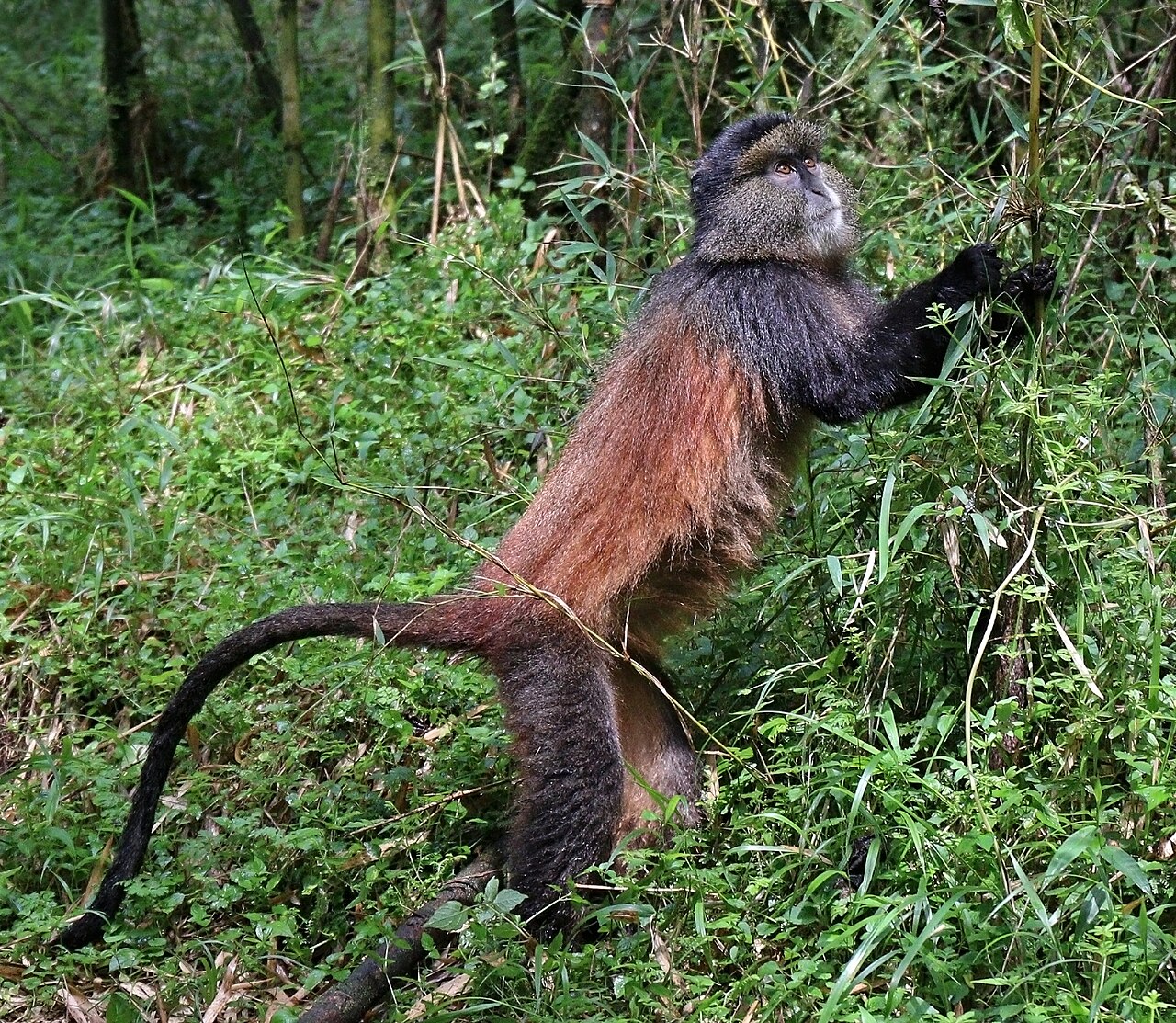
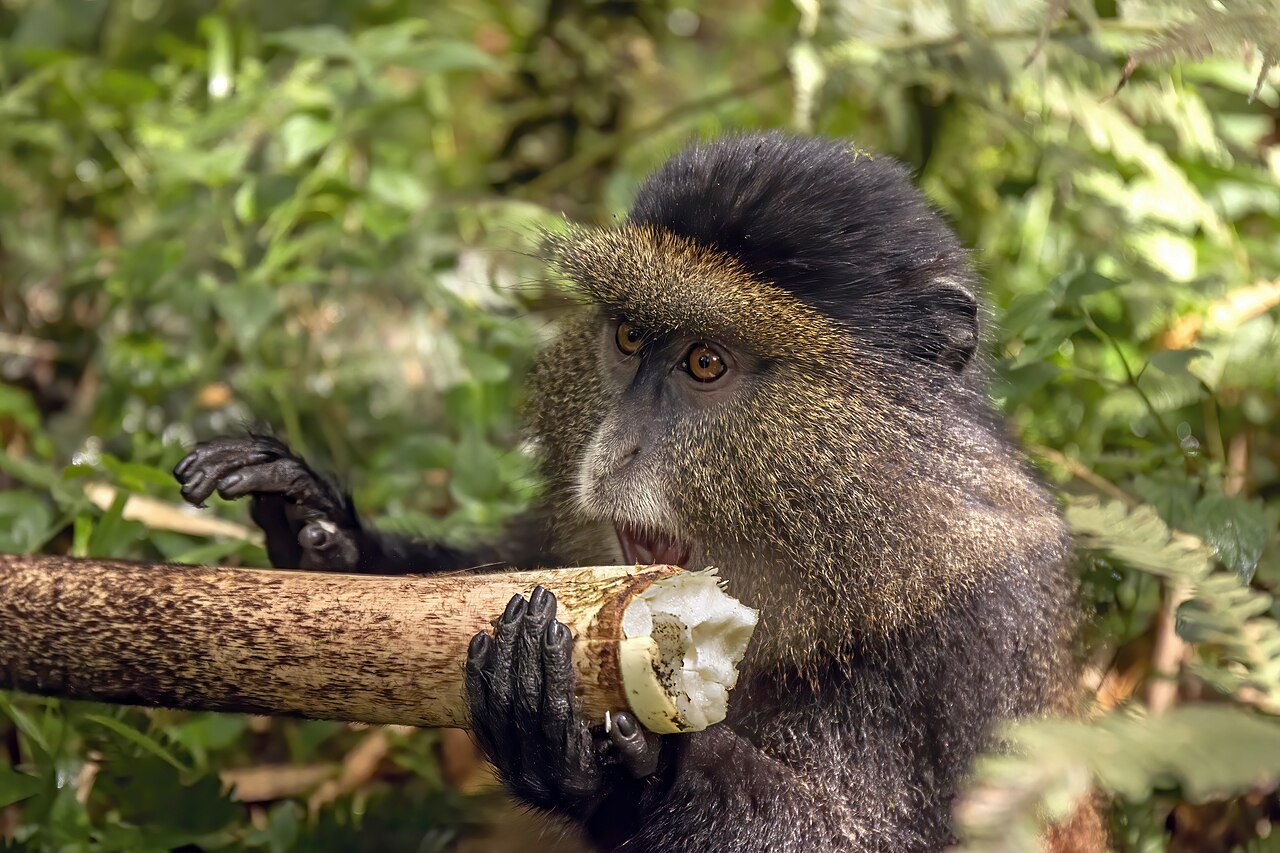
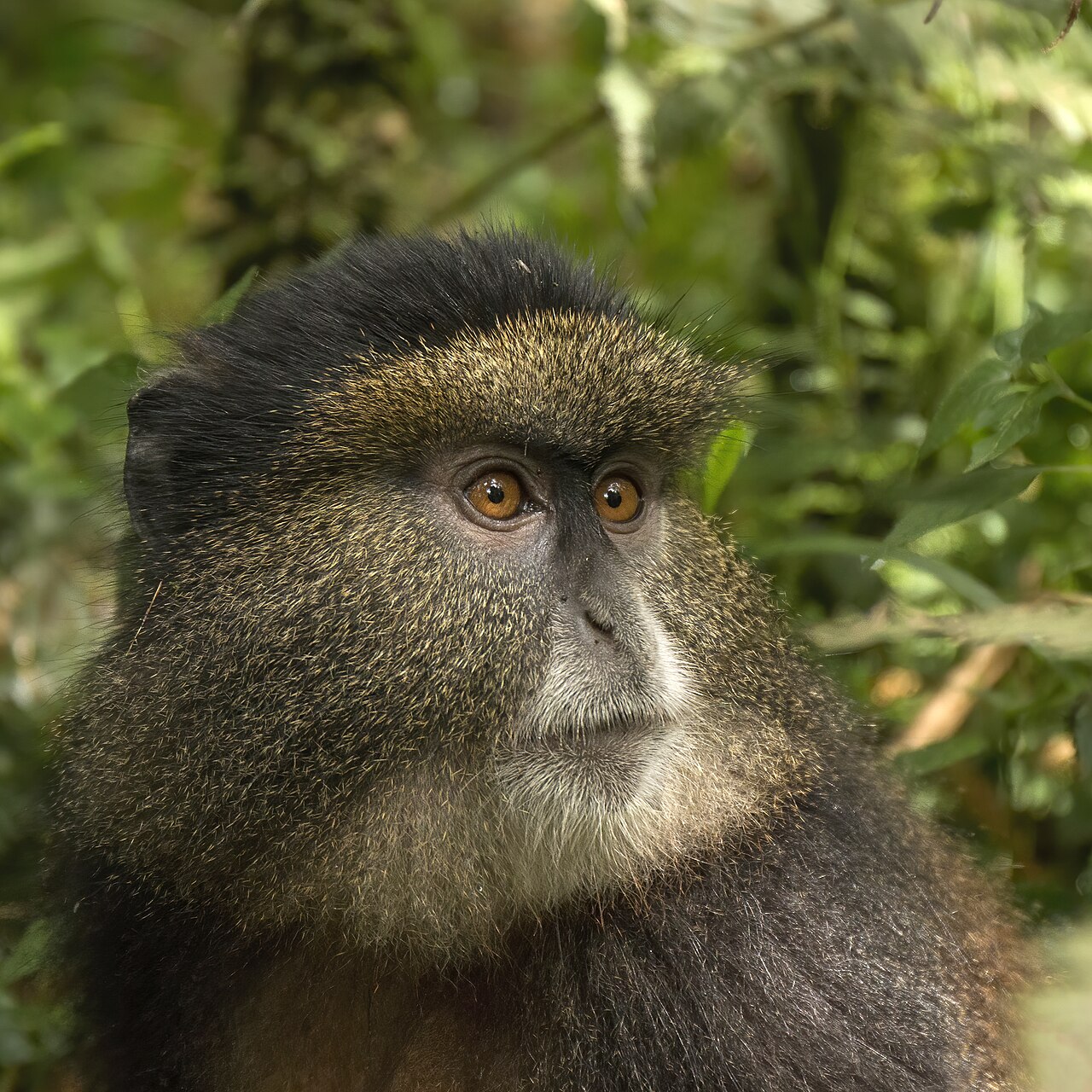
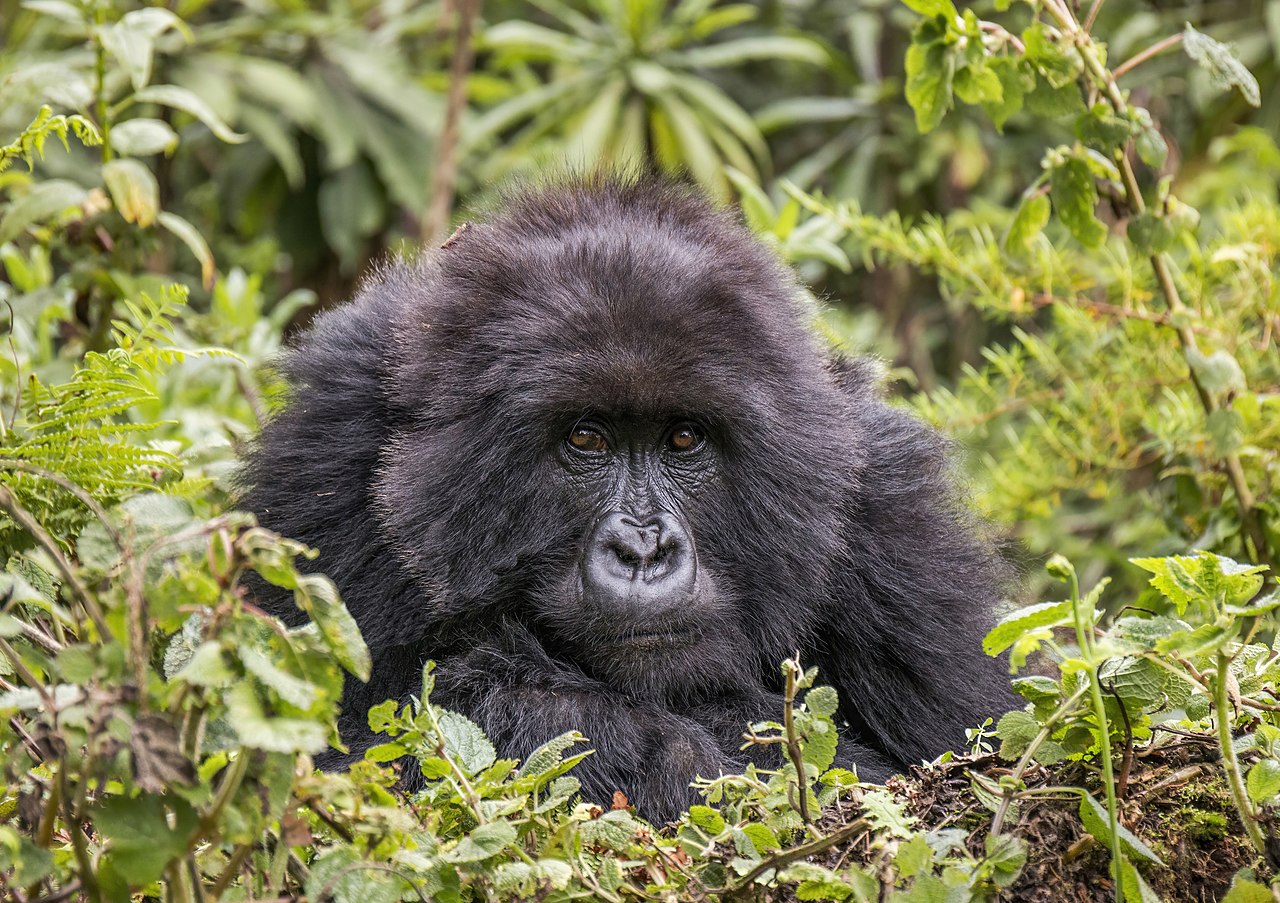
Golden monkeys live only in the Virunga volcanoes, and Volcanoes National Park is their best-protected home. They share the high slopes with the mountain gorillas most visitors come for, but they behave differently: they sweep through bamboo feeding grounds in troupes the Rwanda Development Board describes as up to 30 individuals, and they rarely hold still. The payoff is movement and colour rather than a seated discovery — bright orange-gold coats in green bamboo, at close but ranger-controlled range. Rwanda’s tourism authority notes two habituated groups available for tracking in the park: one on the slopes of Karisimbi, the other in the bamboo zone of Sabyinyo, with a single excursion departing the Kinigi headquarters each day. Read our Volcanoes National Park guide for the wider park context.
How the morning usually runs
Treat this as a full-morning outing, not an hour’s stroll. RDB asks trekkers to report at 07:00 at the visitor information or registration centre, where briefing and group allocation happen before the walk to the trailhead. Tickets are sold first come, first served and times are allocated once you are booked, so a last-minute arrival is a risk rather than a plan. Once in the forest, rangers follow the troop’s signals and feeding marks; viewing happens while the animals move through and across the bamboo. The linked Kigali-based operator product describes its trek as taking about an hour and being less strenuous than gorilla trekking — a useful expectation from one provider, not a rule of the park. After the encounter, groups return to Kinigi; operators running a Kigali day trip advertise roughly eight hours door to door, with about two and a half hours of driving each way, arriving back in the afternoon.
Permits, fees and booking
A separate golden monkey ticket is required — a gorilla permit does not cover it, and neither works without its own confirmation. Tickets are bought through RDB’s online booking portal or a registered operator. The current fee table lists USD 100 for an adult foreigner; a lower resident rate (USD 65) applies to foreign residents of Rwanda after four consecutive months’ documented residency, with similar resident rates for East African citizens and residents, and lower local rates for Rwandan citizens. Residents need passport or work-permit evidence in hand. RDB verifies documents at the park entry, and warns that erroneous or false applications lose entry even after payment, so enter names and passport details exactly as they appear on your documents. Confirm the current fee on the portal for your category when you book — published rates can change.
Who it suits
The official minimum age is 12 years. Operators pitch this as an easier walk than gorilla trekking, and the terrain is generally less steep, but it is still true mountain forest: altitude above roughly 2,500 metres, uneven and often damp ground under bamboo, and rain possible in any month. It suits travellers with a spare morning around a gorilla trek, mixed or less-experienced groups wanting a second primate encounter, and anyone whose main priority is lively photographic subjects rather than a long physical day. Pairing works well from one base: the gorilla trekking guide covers the first morning, and a golden monkey ticket covers the second, from the same Kinigi-area accommodation without repacking.
Staying near the trailhead
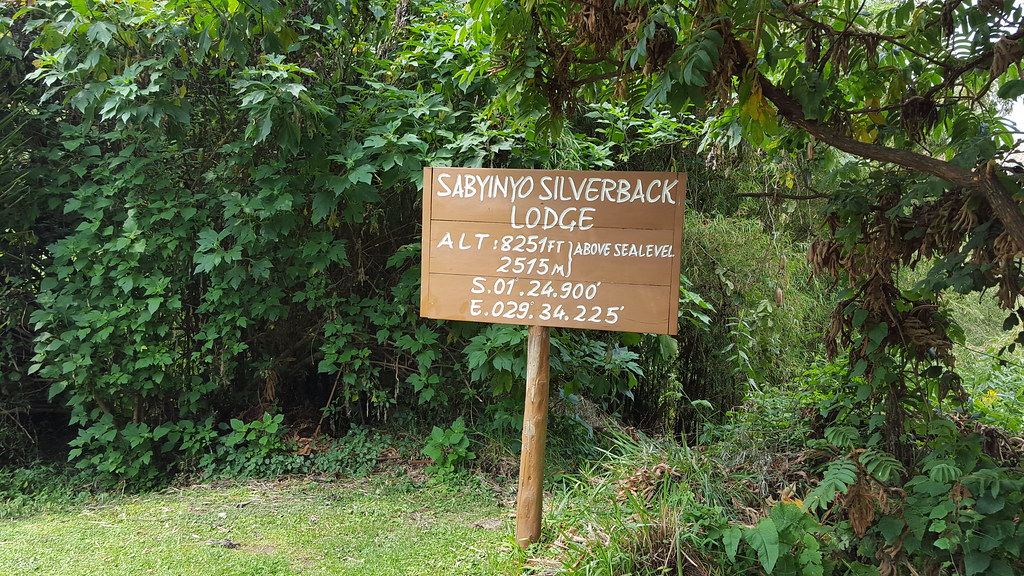
An overnight base in the Musanze or Kinigi foothills leaves the 07:00 briefing comfortably reachable; a Kigali day departure works too if you accept a pre-dawn start and modest slack. Compare bases on the drive to the registration centre as well as on amenities. For a stay close to the park headquarters, see our Sabyinyo lodge guide. The attraction guide also covers other guided experiences and route ideas beyond the primates.
Viewing with care
The troop sets the pace; your ranger sets the distance. Stay where you are placed, keep voices low and movement slow, and let the monkeys move through the bamboo rather than following them off-trail. The linked operator listing, in line with park rules, prohibits drones and littering, and the same expectation applies on any trek: nothing is left behind. Flash photography and sudden lunges for a photo spoil the hour for everyone, including the monkeys. Confirm the current briefing rules with your ranger, as primate-visit guidance is periodically updated.