
.jpg)
Trek Africa GuideTerres Touareg Guest House
Terres Touareg Guest House · Djanet, Algeria, Algeria
Terres Touareg Guest House
A traditional Tuareg guesthouse for Djanet stays before or after a desert itinerary.
Djanet And Tassili · Algeria, Algeria
Photography: Rabahlaouar (CC BY-SA 4.0). Images may be resized or cropped; share-alike licences continue to apply.
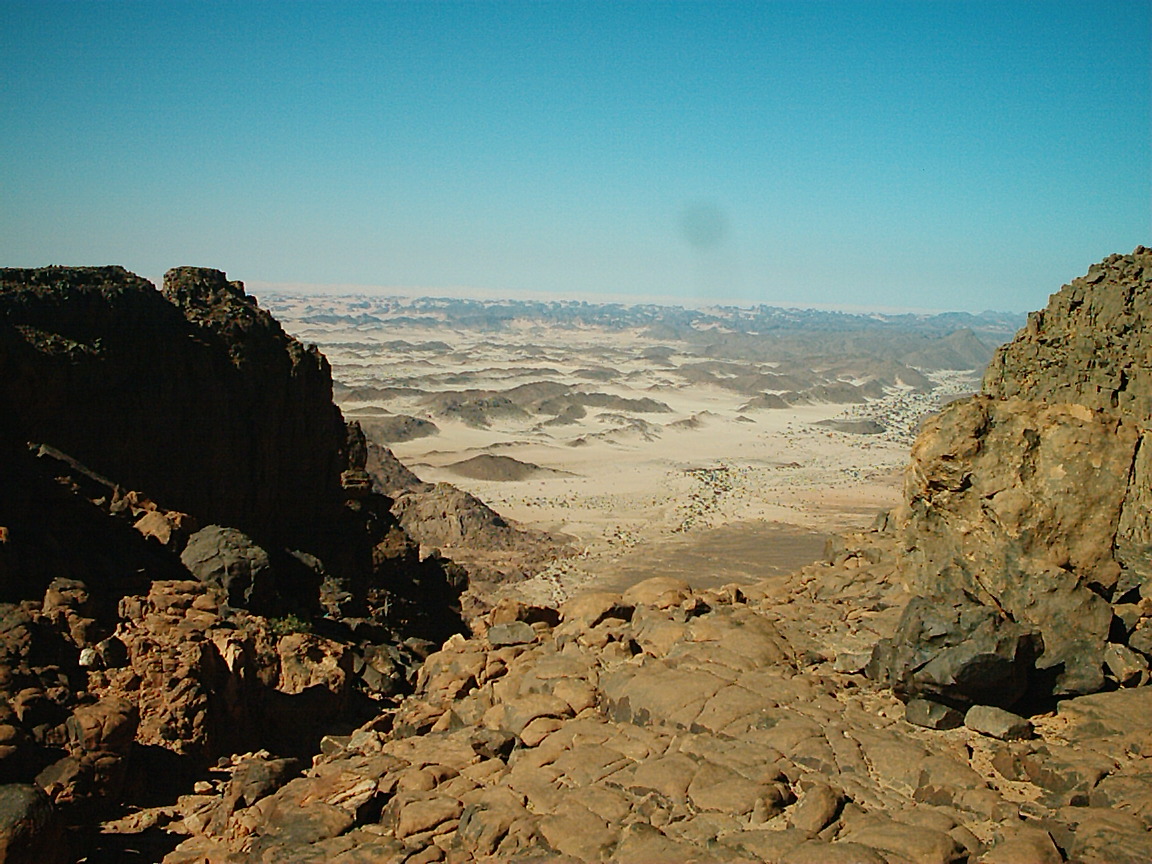
Djanet and the Tassili n'Ajjer region appeal to travelers interested in prehistoric art, desert landforms and an expedition-style journey. This is a place to approach through careful preparation and specialist local knowledge rather than a spontaneous extension of a city holiday. The value lies in understanding the landscape and its cultural evidence, not in collecting remote locations as trophies. A responsible itinerary explains its route, access permissions, camping conditions and walking demands before departure, and gives protected rock art the care it requires.
UNESCO identifies Tassili n'Ajjer as a landscape of major geological and prehistoric-art importance. The art is evidence of human presence and environmental change, and it deserves informed interpretation. Viewing it responsibly means following authorized access arrangements and avoiding touching, wetting, tracing or otherwise interfering with the surfaces.
Our planning recommendation is to choose a specialist whose proposal states the exact area, guide arrangements, daily travel mode and contingency plan. A desert vehicle itinerary and a walking expedition are not equivalent, even if both use the name Tassili. Ask how much time is spent walking, what facilities are available and how the itinerary changes if access or weather makes the original plan unsuitable.
Confirm flight and ground arrangements for Djanet with the operator before booking international travel. Obtain a written explanation of required permissions and the route's current feasibility. Do not plan independent movement into remote or restricted areas on the strength of an old travel account; check current official advice and local authorization.
The operator should match the route to current seasonal conditions, especially heat, wind and overnight temperatures. Ask for a realistic description of daytime exposure and camping comfort. Avoid accepting a broad 'year-round' claim without a route-specific explanation of how conditions affect walking and transport.
Check the guiding language, water provision, camping equipment, sanitation, communications and evacuation arrangements. Clarify what happens if a flight or permission changes. Travelers should assess the physical demands honestly and choose a shorter or less remote route where appropriate. Heritage photography must follow site rules; no souvenir collection or manipulation of rock-art surfaces is acceptable.
Terres Touareg Guest House · Djanet, Algeria, Algeria
A traditional Tuareg guesthouse for Djanet stays before or after a desert itinerary.