

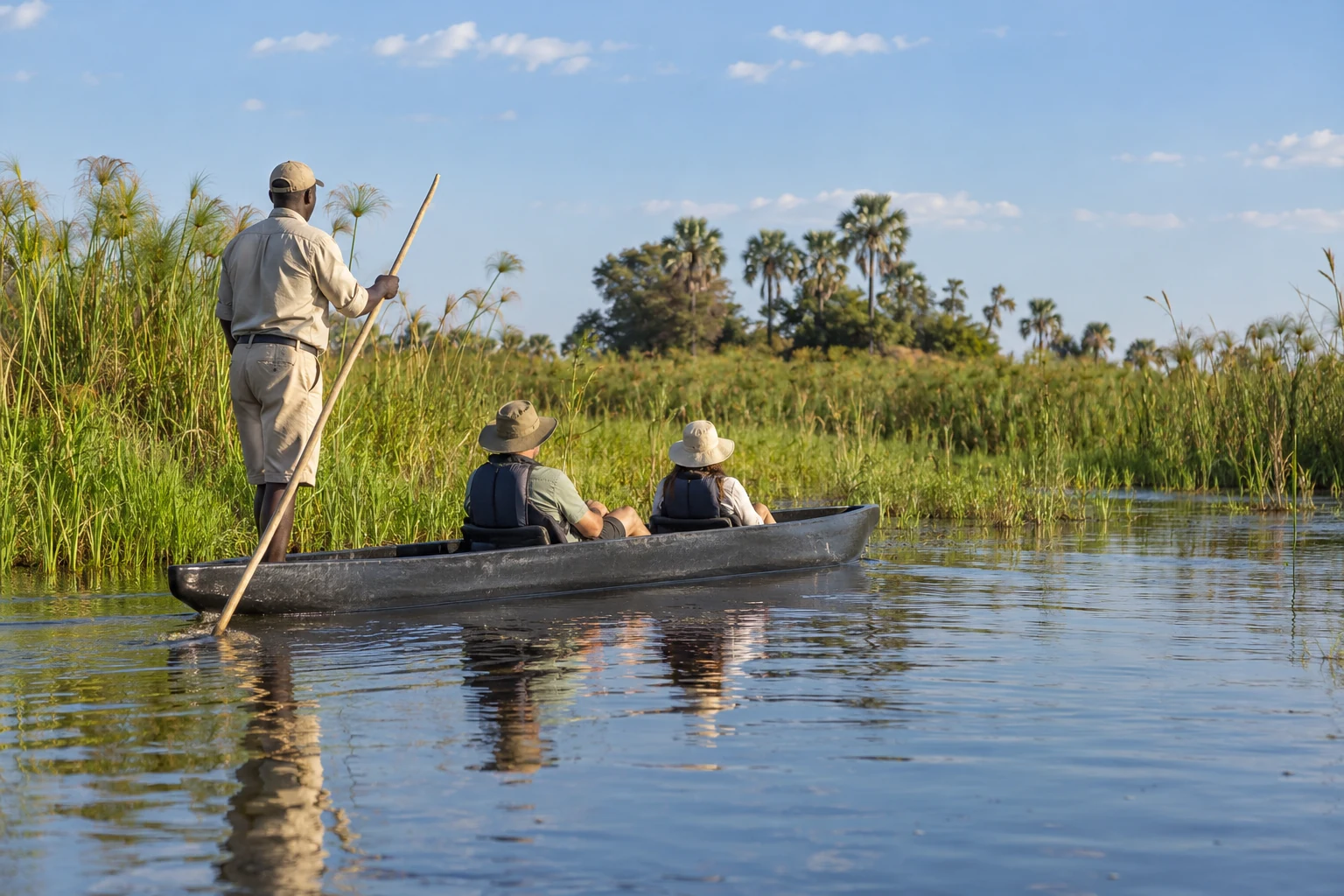
Okavango mokoro and wildlife safari · Botswana, Botswana
Okavango mokoro and wildlife safari
Experience delta waterways by mokoro as part of a guided multi-day safari.
Okavango Delta · Botswana, Botswana
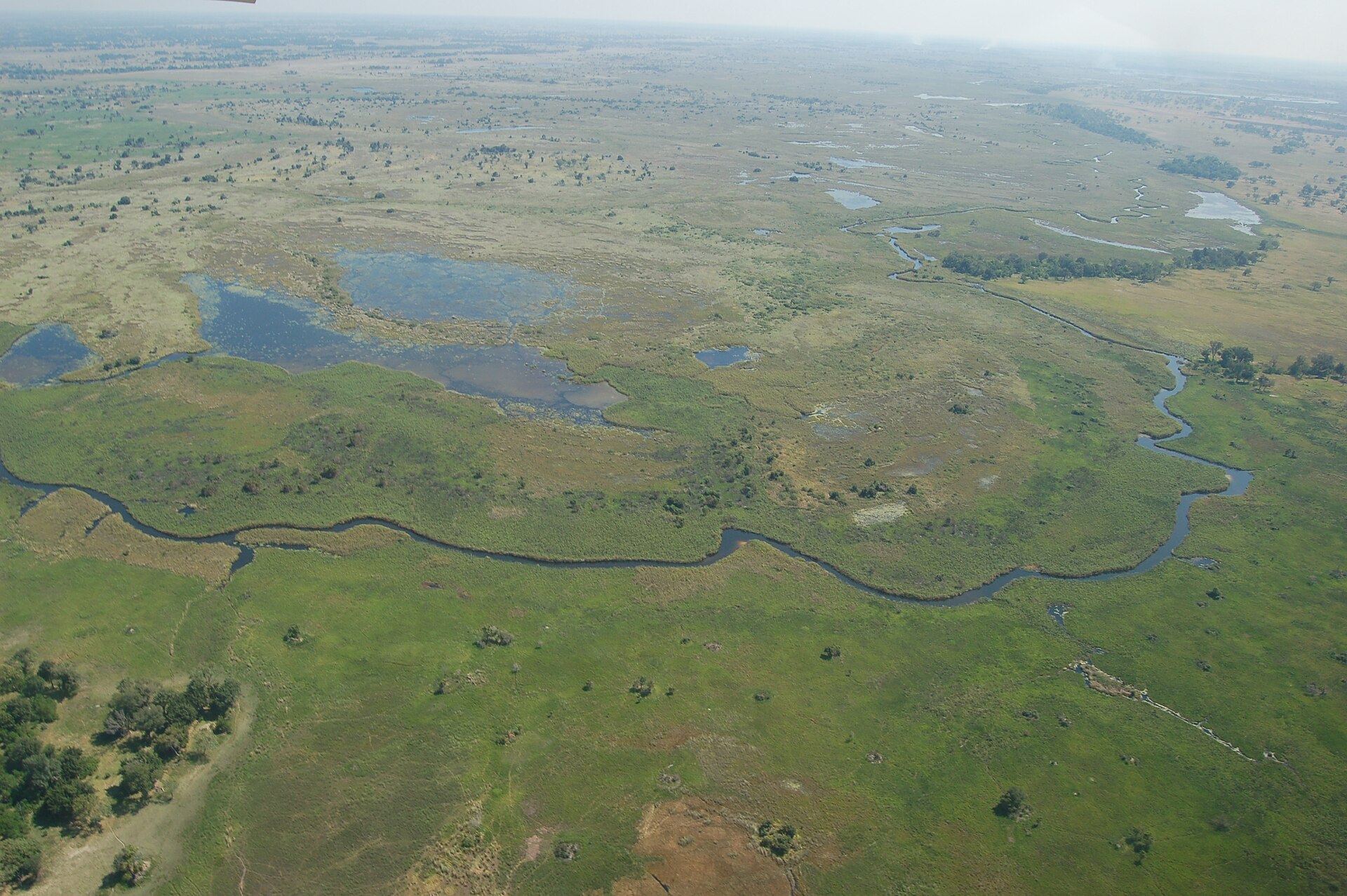
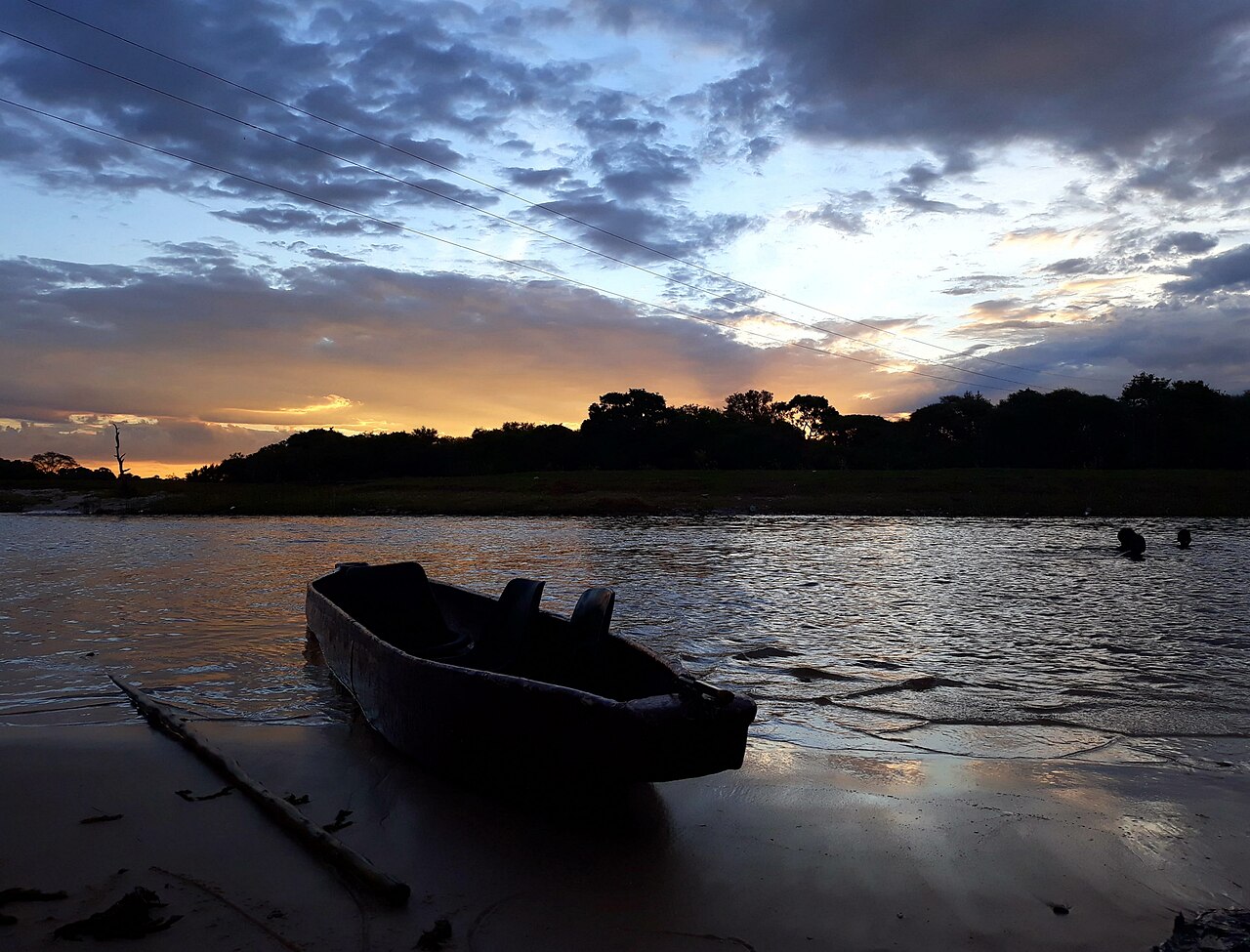
Photography: Joachim Huber (CC BY-SA 2.0) · Mmuso Nare (CC BY-SA 4.0). Images may be resized or cropped; share-alike licences continue to apply.
The Okavango Delta is a mosaic of channels, islands, seasonal wetlands and drier country, and different camps offer genuinely different experiences. A water-focused stay may emphasize boats and mokoro outings, while another base may be better suited to vehicle safaris. The word 'Delta' does not guarantee that every activity is available at every lodge or in every month. Choose the experience first, then check the camp's location and current conditions. Travelers who make that distinction are better placed to appreciate the landscape instead of arriving with expectations created by an unrelated photograph.
Botswana Tourism describes the Delta through its waterways, islands and dryland habitats. Water levels and wildlife movements affect what can be done, and the organization explicitly notes that activities differ from camp to camp. This makes property selection central to the itinerary rather than merely an accommodation decision.
Our planning recommendation is to compare a camp's usual activities, the conditions needed for them and the alternatives if water levels change. If combining two camps, choose complementary settings rather than two similar products. A shorter stay with clear expectations can be more satisfying than a costly itinerary built around an activity that is only seasonally possible. Leave time in camp as well: the landscape is not experienced only during scheduled excursions.
Confirm the gateway, onward flight or road connection, arrival airstrip and final camp transfer as a single sequence. Do not assume that a map distance represents a drivable route through the wetlands. Check baggage restrictions and connection margins for small aircraft, and ask who is responsible if a delayed flight affects the next transfer.
May–August generally brings dry, clear weather and cold early mornings and nights. The greener season offers a different birding and landscape experience. In the delta, ask the camp about local water levels and available activities; regional rainfall and flooding do not follow a simple, identical timetable.
Request an itemized quotation covering transfers, guiding, meals, park or concession charges and optional activities. Ask about age, mobility and participation restrictions for water-based outings. Follow the guide's instructions around wildlife and water. Nearby accommodation should be interpreted through actual transfer logistics; two camps in the same wider Delta may not be practical neighbors.
Okavango mokoro and wildlife safari · Botswana, Botswana
Experience delta waterways by mokoro as part of a guided multi-day safari.
Camp Okavango · Nxaragha Island, Okavango Delta, Botswana, Botswana
An island camp for mokoro, boat and walking safaris in the permanent Okavango Delta.