
Research checked 10 November 2026. This is an editorial planning story, not a booking channel: rooms, access conditions and rules change, so confirm every detail with the property and official sources before you pay.
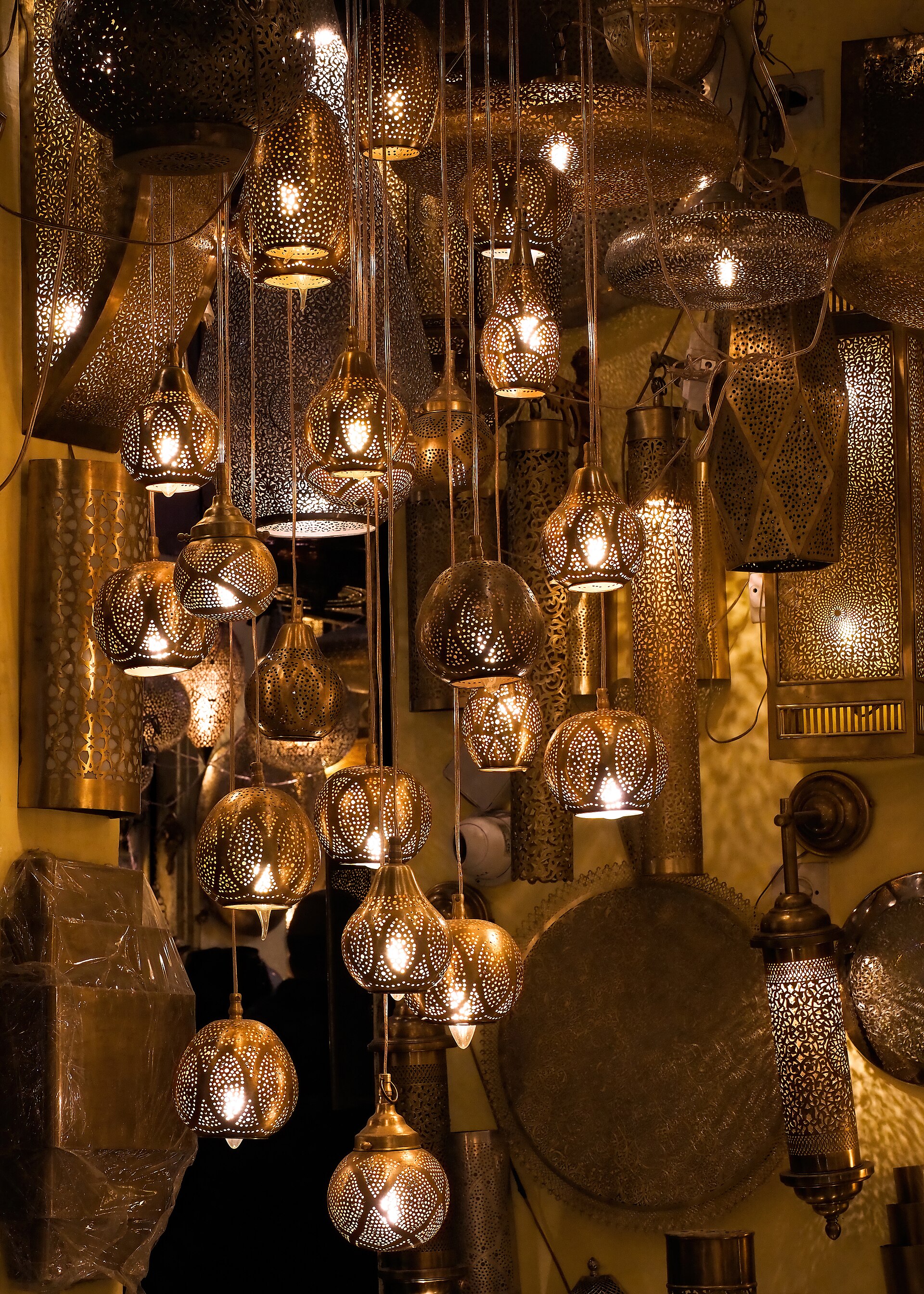
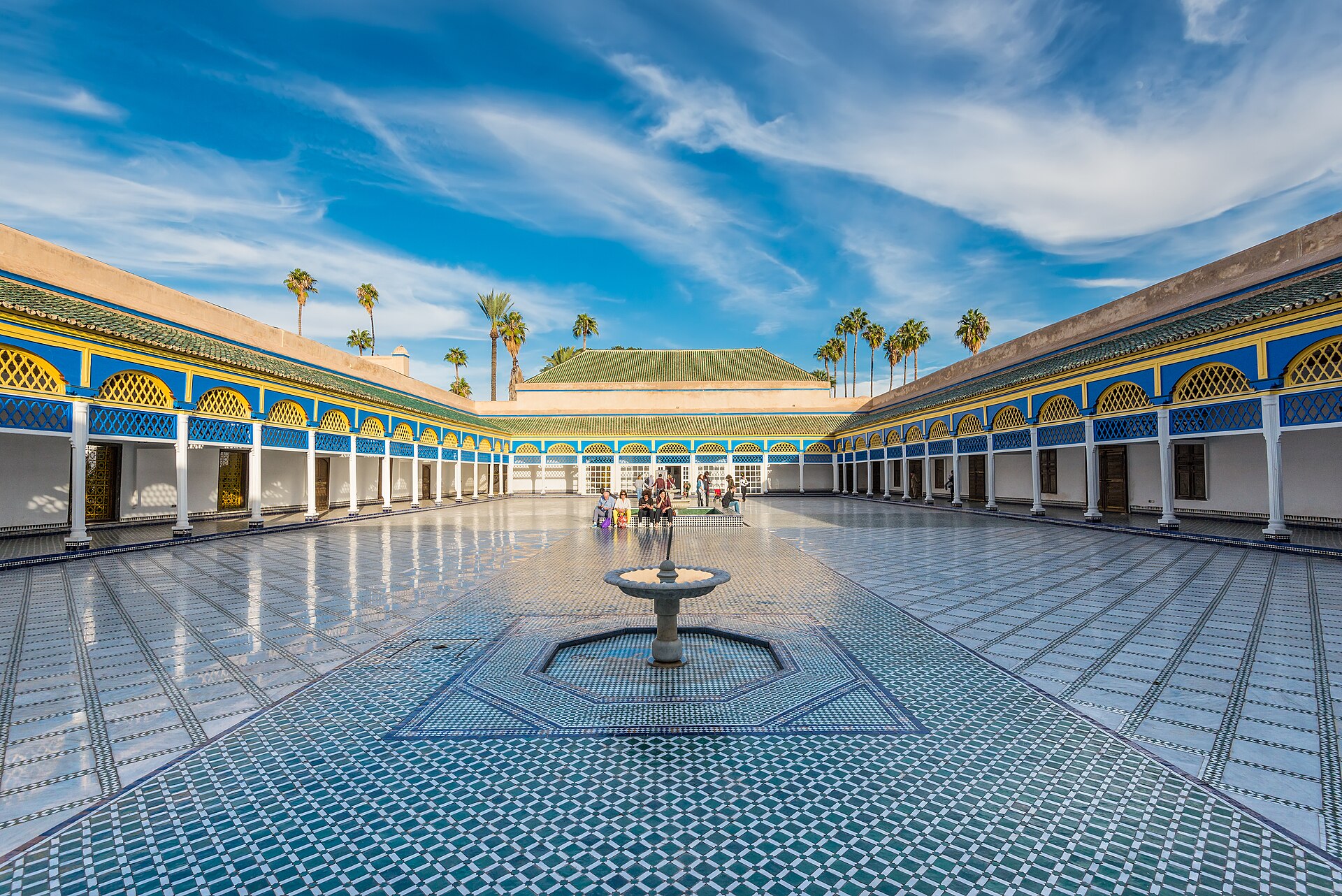
Morocco is published on this guide as a five-surface cluster — the country guide, the Marrakech destination page, the Marrakech And Atlas attraction guide, two city activities (medina street-food tour, Atlas Mountains day trip) and the Rosemary Marrakech riad stay — while the journal's Northern Africa shelf sat empty: eleven published stories, none from the region. That is the gap this run closes, and the decision the cluster leaves unanswered is the one you book first: whether to sleep inside the medina walls, in a riad built around a patio, or outside them in Gueliz's airy avenues. It is not a question of which is nicer. It is the question of where your Marrakech happens.
Choose the rhythm before the district
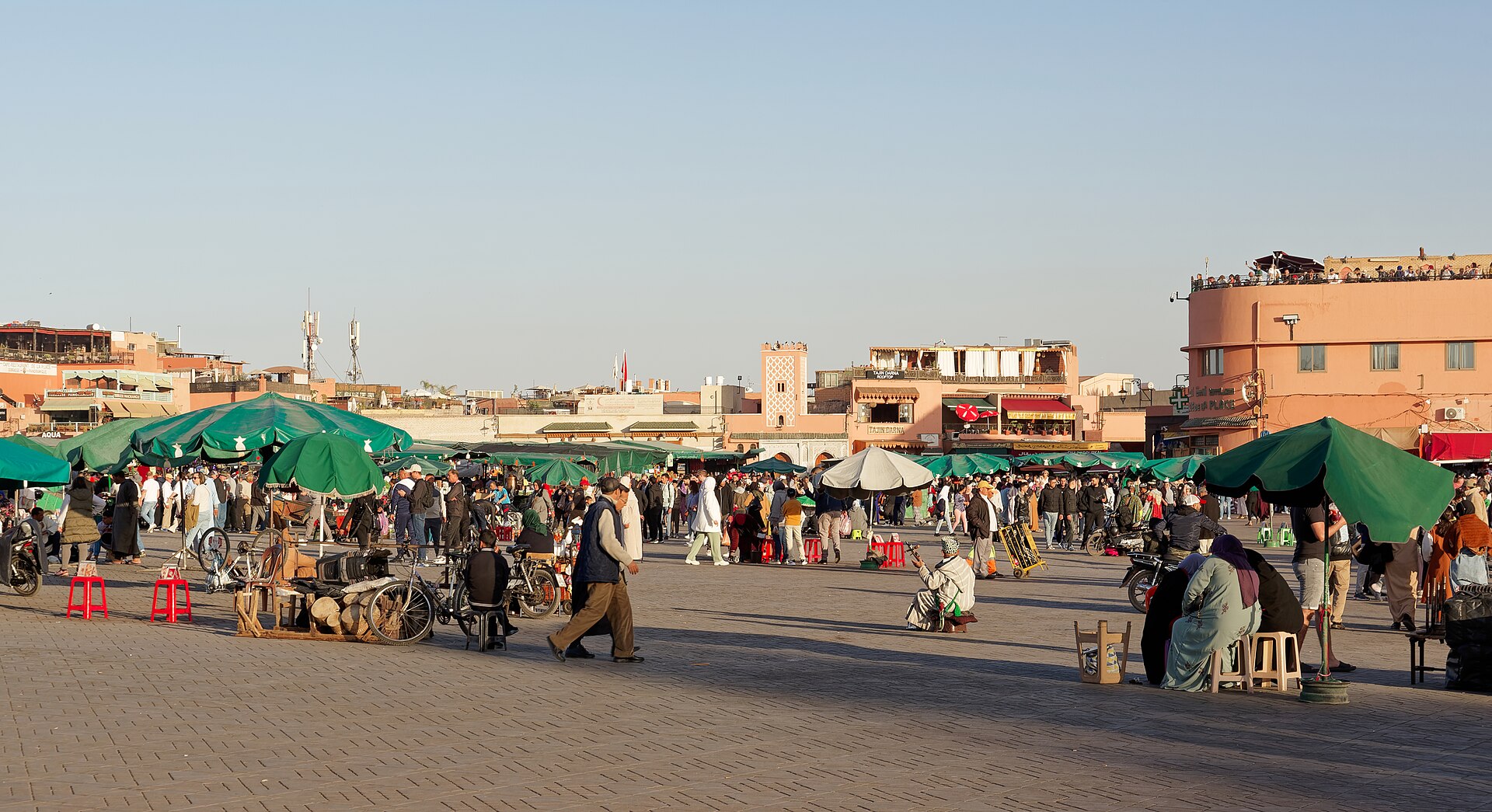
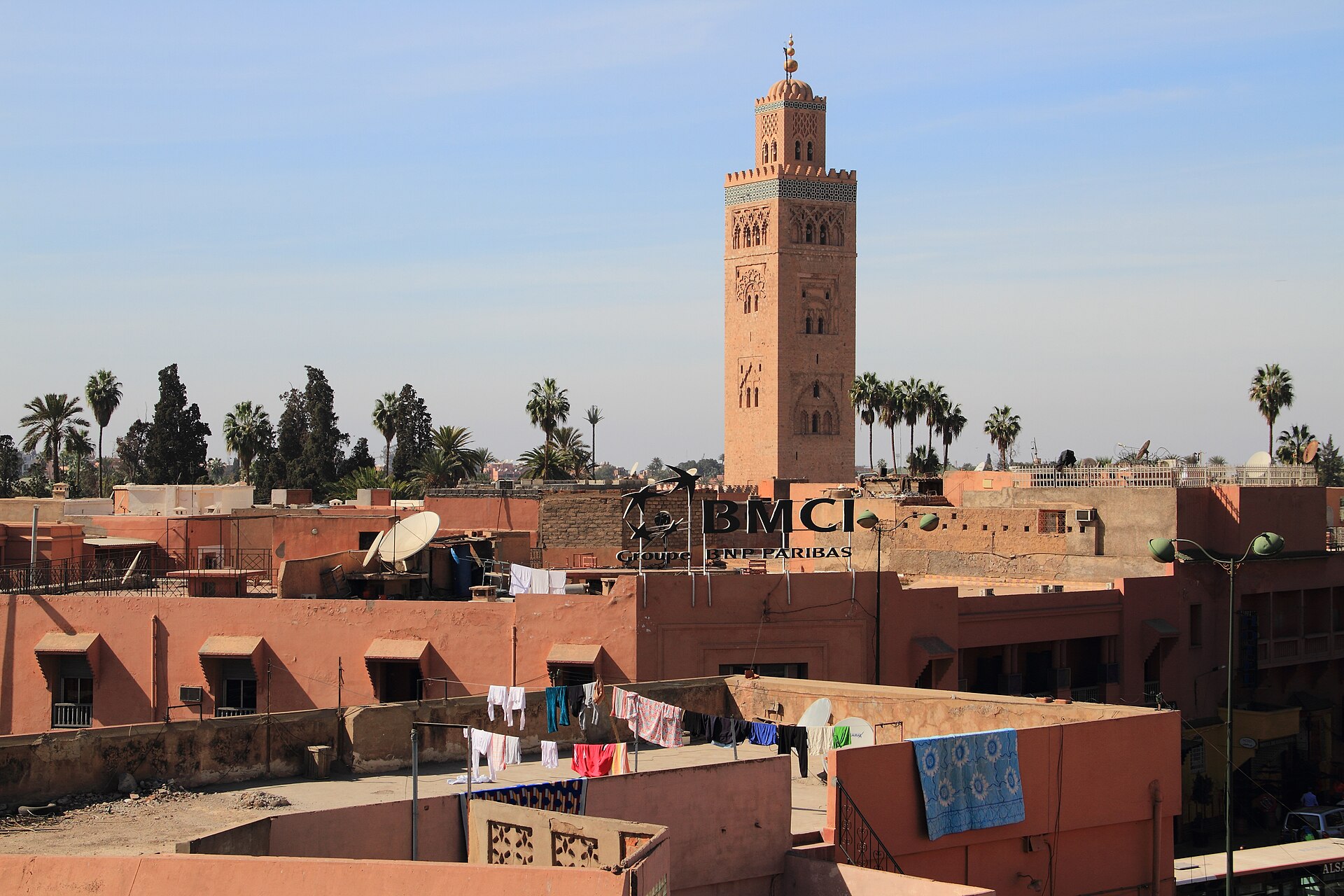
Morocco's national tourism office frames the whole choice in one paragraph: admire the medina's architecture inside a riad — "small oriental palaces overlooking a beautiful patio" — then "you just have to leave the ramparts to be immersed in modern Morocco", where the districts of Gueliz and Hivernage offer "the most modern infrastructures, luxury boutiques and international ready-to-wear stores, airy avenues". Two different cities share one name. The medina's rhythm is UNESCO's square at "the entrance of the Medina", performing "all through the day, and well into the night"; the Gueliz rhythm is shops, pavements and taxis with your own key. If a Jemaa el-Fna evening is why you chose Marrakech, sleeping beyond the walls turns every evening into a scheduled return trip. Neither choice is wrong, but only one of them matches your trip.
What a riad actually buys you
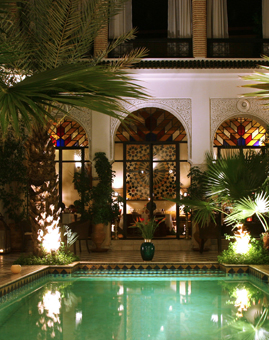
A riad is not a boutique-hotel label. Our attraction guide puts it exactly: the "courtyard-centered form shapes the atmosphere of many stays in the older city". The patio is the living room; the walls stand a metre or so from the neighbour's windows; breakfast is served in the courtyard, and the roof terrace is where the medina's noise finally recedes. The published Rosemary Marrakech guide shows what the form means in practice: five individually designed rooms by LRNCE, a courtyard pool, hammam, salon and roof terrace, with private hire of the whole house on the menu — and, deliberately, spaces shared with other guests unless exclusive use is agreed. The national office allows three days for the city; our attraction guide's structure is two unhurried city days and a separately chosen Atlas day.
What the new town answers
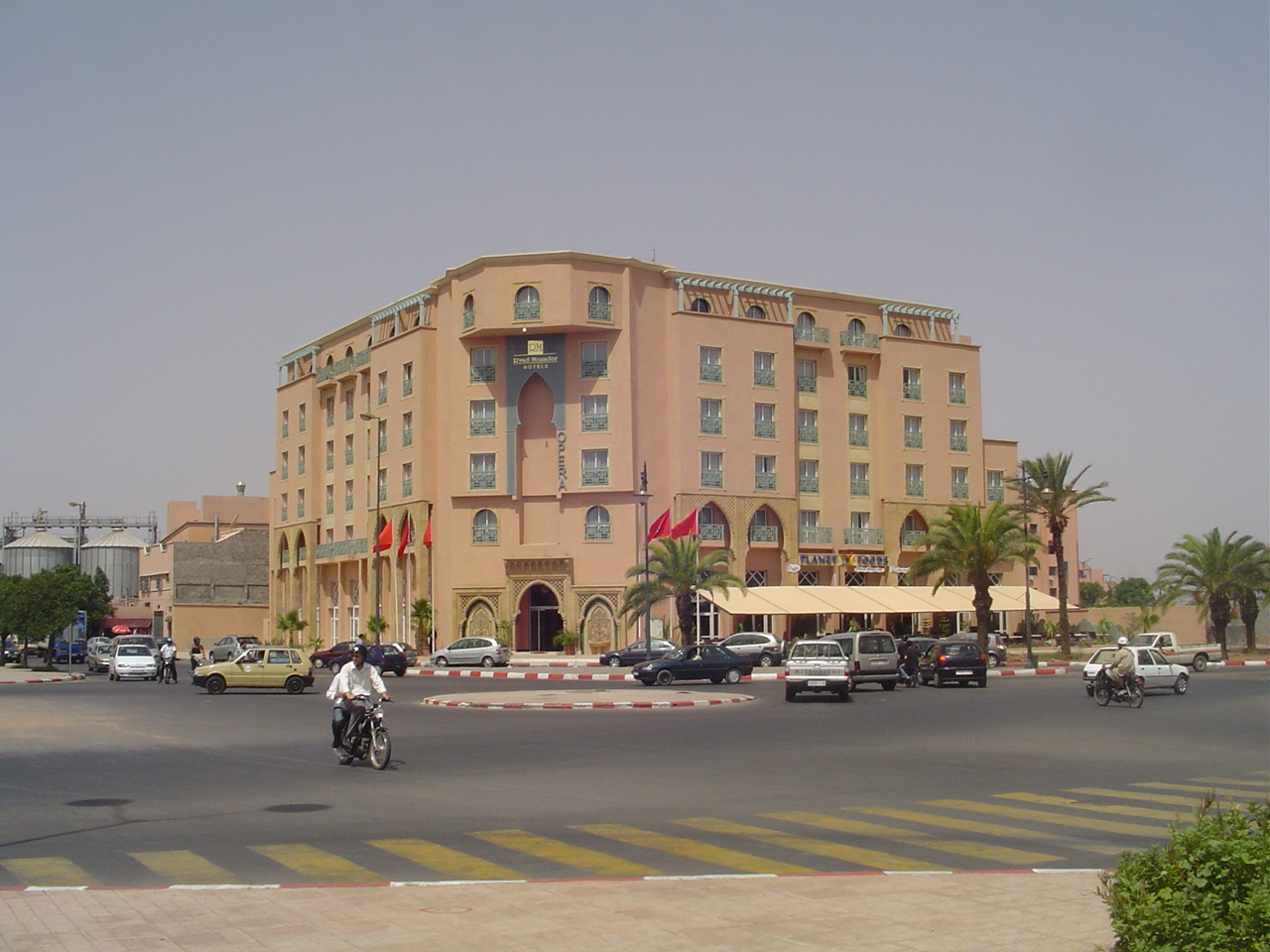
Gueliz is not a compromise against Marrakech; it answers different needs. Wider streets, a vehicle at the actual entrance, pharmacies and restaurants that keep evening hours past the medina's early close — plus, per the tourism office, the districts' "luxury boutiques and international ready-to-wear stores" along "airy avenues". If your days are planned inside the medina but your evenings run later, or you travel with mobility needs, small children or luggage that fights alley carts, the new town pays you back every day. The honest way to compare is the country guide's own rule: "compare specific inclusions rather than labels such as luxury or authentic" — and the walk it takes to get anywhere after dark is an inclusion.
The access test that shapes the arrival day
The medina asks its own fee, and it collects it on arrival night. Our attraction guide: "a vehicle may not reach the door", so agree a recognizable meeting point with the hotel. Marrakech Menara airport to a medina door is one taxi ride, then a cart-and-luggage walk through alleys your driver cannot enter. Rosemary's guide shows how to buy that walk calmly: ask for "the nearest vehicle drop-off and luggage assistance, since the final approach in the medina may differ from a conventional hotel arrival". The country guide extends the rule across the whole route: "confirm the final access to medina accommodation and agree the luggage or pickup arrangement". In Gueliz this paragraph does not exist — and if your flight lands at 23:40 with tired children, that absence is worth a night's rate.
Noise, stairs and shared space
The attraction guide's comparison rule is the shortest useful sentence in the cluster: "Compare stays by walking access, noise, stairs and room facilities; traditional architecture can mean layouts unlike a modern hotel". Unpack it on both sides. A medina house levels vertically instead of horizontally: rooms reached by flights of steps, terraces above bedrooms, a courtyard that carries sound up instead of along a corridor — pleasing by day, decision-relevant at 01:00. Room categories differ per house: Rosemary's guide instructs you to "request the named room", because a balcony or pool outlook is a category feature, not a default. The modern-hotel mirror is the inverse: lifts, corridors that dampen sound, standardised layouts — comfort that earns its rate wherever the medina's texture is not the point.
Shared space has rules of its own. In a five-room riad the courtyard pool, hammam and roof terrace are usually house spaces, not private ones: Rosemary's guide says pool and terrace are "shared house spaces unless exclusive hire is agreed", and asks celebration plans to be discussed in advance to preserve the house's calm. And the courtesy runs outward too: the country guide asks visitors to respect "the photography expectations and the privacy of residents", the same pressure UNESCO's square record names as tourism acculturation — so hold the camera back and ask before photographing people or private spaces.
The checklist before you pay
- Where your evenings happen: the square's night rhythm inside the walls, or the modern districts' late hours and calm streets outside.
- The arrival plan in writing: nearest vehicle drop-off, luggage assistance, meeting point — "a vehicle may not reach the door".
- The named room: "request the named room"; a balcony, suite or pool outlook is a category feature confirmed before payment, not a hope.
- Shared space rules: courtyard pool, hammam and roof terrace — who else uses them, when, and whether exclusive hire exists.
- Stairs and mobility: traditional layouts often mean steps where a hotel has a lift — ask before booking if this matters.
- Season honesty: March to May and September to November are the office's comfortable months; summer is very hot and winter evenings cool — whichever side of the ramparts you choose.
Where this leaves you: book the walls when the reason to return nightly is the point, book the avenues when daily access outranks the charm, and treat the pair as what they are — one city with two nervous systems. The cluster behind every claim here is the trip's map: the Marrakech destination page for the days, the Rosemary riad guide for the walls, and the Marrakech And Atlas guide for the excursions from either side of the ramparts.
Field context lives in the published pages this story is built on: the Morocco country guide, the Marrakech destination page, the Marrakech And Atlas guide, the street-food walk, the Atlas day trip and the Rosemary Marrakech stay.